

By: Brian Jules Campued
Even if the art world is in a gender imbalance, where men are most celebrated for their contributions to the arts and culture, this doesn’t mean that there have not been any creative woman working in the scene. In the Philippines’ decades-long roster of National Artists, there have been a notable number of women who have influenced art history and shaken up the art world. This National Women’s Month, here’s to some of the remarkable Filipinas who paved way for the development of Philippine Arts. Here’s to our own femme trailblazers.
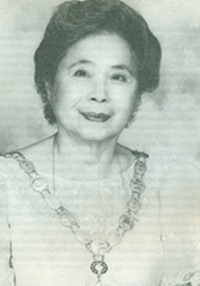
Leonor Orosa-Goquingco. Of course, the best person to start this list off is none other than the “Trailblazer” or herself, Leonor Orosa-Goquingco, the National Artist for Dance. Well, aside from dancing, Leonor also draws, plays piano, sculpts, directs, acts, and choreographs. An incredibly versatile artist, she brought native folk dance to its highest stage of development earning her the title, “Mother of Philippine Theater Dance.” She choreographed the first Philippine folkloric ballet, “Trend: Return to the Native” in 1941. Moreover, she founded Filipinescas Dance Company in 1958 and toured the world with it for six years. Honoring her contributions in incorporating the Philippine culture in her dances, she was conferred the National Artist for Dance in 1976.
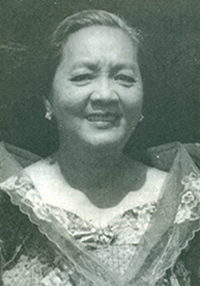
Rappler)
Francisca Reyes Aquino. Another trailblazer, Francisca Reyes Aquino started the inclusion of women in the Order of National Artists as she was the first woman to be awarded the prestigious honor (which she got in 1973). She was acknowledged as the Folk Dance Pioneer for her research and promotion of Filipino folk dances where she traveled around the country to study about folk dances and local celebrations of remote barrios. She had also published several books on dances which are used for teaching until now. Her works and passion for Filipino culture earned her two honors preceding the Artist award, the Republic Award of Merit in 1954 and the Ramon Magsaysay Award in 1962.
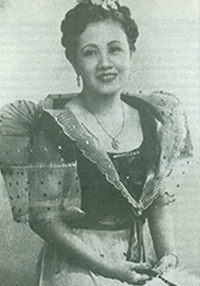
Honorata de la Rama. Every old soul loves some kundiman once in a while, and thanks to Honorata ‘Atang’ de la Rama, the Philippine folk song did not fall to its slumber. Atang excels both in music and in theater, she became known for singing “Nabasag na Banga” after starring in the zarzuela, “Dalagang Bukid.” Believing that art is for everyone, she brought kundiman and zarzuela to the native tribes and also introduced it to the world. This undisputed “Queen of the Kundiman and the Zarzuela” is proclaimed a National Artist for Theater and Music in 1987.
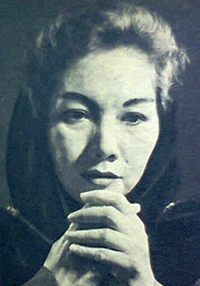
and Letters via Rappler)
Daisy Hontiveros-Avellana. Together with husband Lamberto Avellana, they are the power couple of Philippine theater with Daisy being called as the “First Lady.” Lamberto’s first highly acclaimed movie, “Sakay” (1939), was written by Daisy. While in her theater stint, she was most remembered for acting in the stage and film versions of “Portrait of the Artist as Filipino” in 1955. In directing, she directed the opera “Diego Silang” (1968) and the Zarzuela “Walang Sugat” (1971). For popularizing theater and dramatic arts in the country through radio and television, Daisy was honored as a National Artist for Theater in 1999.
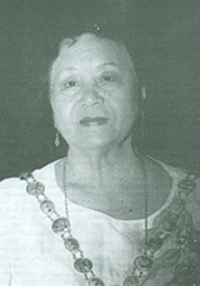
Edith L. Tiempo. The only female National Artist for Literature, Edith L. Tiempo is a poet, fictionist, teacher, and literary critic and acknowledged as the “Mother of Philippine Literature.” She has won numerous Carlos Palanca Memorial Award for Literature for her works such as “Tracks of Babylon and other poems,” “The Black Monkey,” and “The Dam.” Also regarded as one of the finest Filipino writers in the English language, she and her husband founded the Silliman National Writers Workshop which has produced some of the best Filipino writers.
Undoubtedly, these women are of great artistic caliber; bringing progress to the arts and taking the game to a notch higher. In observance of the Women’s Month, let’s celebrate the remarkable power of women who are always making waves in the world.
 Young ECHO
Leave a comment