

By: Darwin Pesco
Imagine a world where no one can be trusted despite a bunch of information available. A society of never-ending doubts, everyone is a faithful follower of deception. The day when we are living in paranoia of lies is near and what is happening in our society now signifies that we have a bleak future ahead. Our failure to distinguish the effects of information and communications technology brought us to the prelude of massive informational crisis – the Infocalypse.
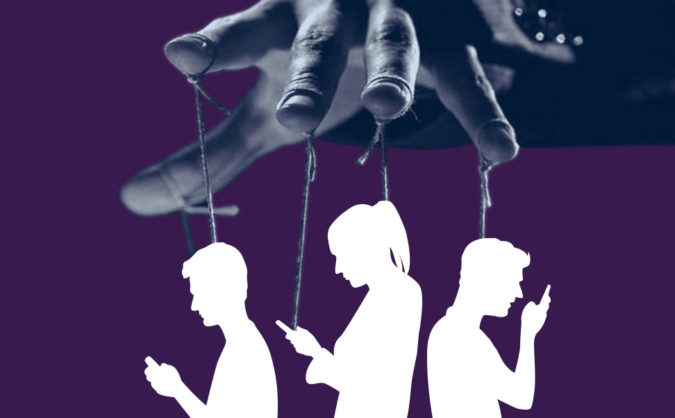
Technology drives the society’s development and pushes innovation, but now we are on the brink of dystopia where the truth is strenuous to excavate. Suddenly, the trends in the communication, information, and politics are just the starting point to break down and prevention is not even an option. Here is the caveat – All we have seen is just the beginning of wider informational and political catastrophe and we are now witnessing our democracy slowly dying in the darkness.
Significantly, there had been few voices expressing concerns about the dubious platform of the social media as a source of information. Aviv Ovadya, an information expert, had predicted the rise of fake news before its popularity arose on the 2016 US Presidential elections period. Ovadya warned the public of an “Infocalypse” which he presumed as the future of the global affairs and the informational technology. Under the Infocalypse, no one would believe at everything and we would have doubts at every piece of information whether it comes from the government or media organizations. The future is unimaginable and promising a total collapse of global order.
How we came to a point where we are now on the verge of information apocalypse? Social media and the internet was one of the greatest innovations in human history in the 21st Century. Nevertheless, there is a wide political crisis globally due to continuous disinformation and misinformation which is plaguing the cyberspace. The problem with the social media innovation is its unstableness and unpredictability since it was made we didn’t treat the social networks as ominous but rather a gift from heaven.
Spreading of fake news is the catalyst for the dangerous promises of the Infocalypse. It all started in the so-called “factory of fake news” by the young people in the small town of Veles in Macedonia. Gigantic earning is the root for the teenagers to accept the job. Soon, the small-time manufacturing of false information on the social media was spread globally with the aim to infect the people who are not “fact-immune”.
False information has been tormenting the political landscape globally. The first wave of its impact was felt during the 2016 Presidential Elections in the United States in which Donald Trump won the election against Hillary Clinton but not in the popular vote. Right after the election, Comparative National Elections Project conducted a study and found out that proliferation of fake news could change the outcome of the election. The study suggested that “pernicious pollution” brought by the widespread of fake news is effectual enough to influence the election.
The study is one of the few studies about fake news, the conclusion is alarming because fake news can be used to deceive voters completely that can eventually alter the election’s result. It’s true that propaganda is part of every election campaign and today’s strategy to win the heart of of the voters is unconventional and poses an imminent danger. Fake news is a setback to any country which are holding free national elections.
The US is not the only victim of this informational virus but all countries around the world. Social media such as Facebook is building an “invisible empire” where every netizen in various countries is its blind followers. As long as a certain country is covered by any of the social media giants, it is impossible to get away from the sickle of disinformation. Suffice to say, Facebook holds the card to future.
Information manipulation is a game changer indeed in the global politics. Latterly, British Prime Minister accused Russia of weaponizing information to empower their dominance in the international affair and called out for having a goal to “disrupt the world order”. Germany also blamed Russia for spreading false information against far-right sentiments. Now, Vladimir Putin is the man of the hour and he proves that information is a potent political machinery and a barometer to prove a country’s dominance. Russia’s intervention in the US election and propagating fake news is still under investigation and will consume a lot of time to prove, suddenly this could be a forever puzzle to be solved.
Fake news is a propaganda and this trick has been used in the game of politics like mud-slinging and puffery, it is just an evolution of the term. There is a long-time marriage between the politics and propaganda, it is impossible to split the two. Fake news entered the spotlight during the recent elections of every country around the world. The confluence between the technology and politics these days makes it harder to beat the proliferation of disinformation.
Eventually, the “fake news” term became a misnomer and now used every time. The term is losing its definite definition. According to Claire Wardle of First Draft News, the term is now used to describe everything. The fake news is now losing its meaning and there are also arguments that it shouldn’t be called fake news for news is naturally factual. ‘Deceptive content’ is a better word to describe the deliberate manipulation of information to persuade people.
Alexio Mantzarlis, a journalist, opined that the large magnitude of fake news these past years was because of the frequent usage of the term and was used excessively by the media in every report or editorial. It would be better to start refusing using the term “fake news” per se. According to UNESCO, the best way to solve the issue on the fake news is avoiding the term for it undermines all kind of news.
Politicians’ usage of the term is a threat to counter the legitimate media or news organizations. Illegitimatizing the media is the pattern of the current presidency of Donald Trump in the United States where he labeled CNN as “fake news”. But Trump is not a lone wolf in this political strategy, many world leaders are imitating his actions like Recep Tayyip Erdogan of Turkey who used “fake news” as an allegation to jail some journalists. Words are powerful and it is evident that the words against public officials can also be used to attack their critics. A single term like “fake news” can literally change the flow of politics and the stableness of the society.
From Veles, the fake news reaches all countries. The Philippines, a country that is just starting up from the ashes of corruption and political instability is also a successful target of the fake news. There are sufficient pieces of evidence proving that fake news meddled in our country’s recent election and allegedly President Rodrigo Duterte used it to win the voter’s heart. Also, a news story broke out from MSNBC accusing Facebook had had a deal with Duterte to use the social network as a political machinery before the 2016 national elections.
The archipelago first experienced the fake news’ disastrous wave during its 2016 election, months ahead of the US poll. Aside from the striking personality of President Duterte and his prominent “War on Drugs”, his presence on the social media is undeniably effective and allegedly brought him to the presidency. There have been efforts from the Philippine legislature to fight the spread disinformation through conducting investigations and in one of the hearings, a veteran journalist Ellen Tordesillas pointed out that Duterte is the peddler of fake news. Apparently, some of the President’s officials gave wrong information to the public and even the President himself. But those malfeasances didn’t have an impact on the majority of Filipino people, they still trust “The Punisher” as reflected on the Duterte’s trust ratings.
Evidently, there are reasons why Filipino people are ignoring mainstream media and love the alternative source of information such as bloggers. According to the University of the Philippines Journalism Professor Danilo Arao, corporate structure, editors and reporters’ lack of understanding of the ethical standards of journalism, false sense of empowerment in reading fake news, failure of advocating media literacy, and shortage of in-depth analysis in the field of journalism are the main causes of people’s leaning toward the fake news purveyors. Bloggers become source now of information in the Philippines. An example is a blogger named Mocha Uson, she is a die-hard supporter of the President and has a rich history of misleading contents on her Facebook Page. Yet, the President appointed her as Assistant Secretary of the Presidential Communications Operations Office. It is arduous to combat false information if the people accused of it are serving inside the government’s backyard.
Perennially, the Philippine government always justifies its wrongdoings especially in the false information shared by its own officials. Harry Roque, the Presidential Spokesperson, stated that fake news is part of the free marketplace of ideas, which is hardly acceptable. The statements from the government are alarming for it seems that they are encouraging spreading bogus information and treat fake news as a usual element of the free expression of ideas.
The Philippines is one mile away from the gate of hell of Infocalypse. Facebook pages of legitimate news organizations such as Rappler are plagued with a lot of diatribes from the staunch followers of the President, calling the news website as “fake news”. In every post of some news organizations, there are always comments from the netizens calling the sites as bias and came to a point of posing threats.
Confirmation bias can be the root of all this outrage from the people. Filipino netizens only read, believe and support the websites or sources that back up their political views. Emotions are dominating over facts for the majority of the Filipino social media users. Social media magnifies the political hypnotism in the country through the new informational drug – the fake news propaganda.
Facebook is like a wolf hiding in a sheep’s clothing. All eyes are on the company now for the site is blamed for tolerating wide disinformation and recently accused of data breaching for obtaining substantial data from its 50 million users that were allegedly used for the recent US elections. Let’s admit it, Facebook is a business and personal gain from the company’s part is its primary goal.
The use of the social media has changed. At first, Facebook and Twitter were created to break the wall among people, to connect everyone but then again, the function of the sites is going deviant. Social media are now used as a source of news and there are vast of news content teeming the walls of the users. A survey from Pew Research in 2017 shows that two-thirds of US adults treat social media as a major source of news and information.
Additionally, Ovadya pointed out that those social networks are prioritizing shares, clicks, and ads over quality information which is, in fact, happening on the Facebook’s algorithm. This way of information sharing is the reason why false information spreads faster than the real news because people love yellow journalism, gossips, and conspiracies. Without a doubt, the more we are dependent on Facebook as a news source, the more we are vulnerable to be deceived. We are all stuck in a cage, ready to be eaten alive by wild lions.
Solutions to the problem that is already widespread are challenging. Fake news is a pandemic informational disease, and the only way to be immune is a vaccination of education and awareness. The best antidote to these deliberate manipulations is through media literacy education. In the Philippines, media literacy is not a priority in the educational system, only communication students in college are privileged to take the subject. Responsible and critical use of various forms of media should be taught from the elementary level. The good news is there are organizations such as the Out of the Box that advocate for educating the youth about media literacy. Educating the large percentage of the over 40 million active Filipino users of Facebook is a vital step to slowly cut the root of disinformation, it would be a protracted and holistic process but it will surely have a significant result.
Moreover, there are other alternatives to defeat the fake news proliferation. First is to focus on the fact checking which comes from the side of media and news organizations. Currently, some news websites are doing efforts to counter misleading contents circulating the social media. One of those websites is Vera Files and according to one of the editors, Ms. Tordesillas, President Duterte keeps them busy. But the people should also know how to verify contents, the fact-checking websites can’t do the job alone and it all depends on the netizens at the end. There must be wide campaign to inform the social media users on how to check if a certain website is legitimate or not. The government should take the lead in campaign drive nationwide so that not even the youth could learn the proper consuming of news but also the adult Filipinos.
Also, National Union of the Journalists of the Philippines (NUJP) launched a plug-in that flags fake news articles whenever it appears on everyone’s newsfeed. This effort is great for it proves that we can use technology to beat fake news. The process is simple, a reader can report a suspicious site and the group of the independent team will examine it and eventually, the websites will be blocked. But the feature is not popular to many netizens, so there should be more promotion. Another effort we can do is to call out Facebook for what is happening on their platform. Recently, the #deletefacebook campaign rang a bell and people are outraged that Facebook is using our data for their business gain. We should always remind the company to protect the users and take action about the continuous spreading of fake news.
The Philippine legislature is rolling a bill to penalize the people spreading fake news online. There have been two bills that are in the process, but both have weaknesses especially on not defining fake news effectively which could eventually turn against the legitimate media organizations and could be used as a tool for press repression. This could be the Filipino version of Germany’s Netzwerkdurchsetzungsgesetz that sparked resistance from a lot of journalists. The effect of regulation through law would be parlous and just promote the censorship which is the favorite tactic of any authoritarian leader.
Ovadya was not the first one who predicted a disastrous effect of interconnection of people through computers and information technology. Marshall McLuhan, a famous communication scholar had already known this phenomenon would happen. McLuhan coined the term “Global Village” where our world is shrinking into a village, and there is no boundary in communication and sharing information through the use of electronic media. Today, there is no monopoly of knowledge, everyone can be a content creator and anyone can persuade an audience. McLuhan predicted a “wired planet with no boundaries”, and information is a commodity. Currently, information superhighway has many imperfections and will eventually collapse, everyone could be a casualty with the incoming Infocalypse.
We should learn to people like Ovadya and McLuhan, we should get alarmed by their prophecies which have the basis. Democracy is under threat, especially now that we have entered the post-truth era. The truth behind these lies is we cannot get away with this system, we are now dependent on social media and boycotting it is indeed impossible. The best we can do is cooperation among the governments, social media companies and the users as well. The future after the post-truth era is disturbing, especially there is a rising trend that video and audio can also be falsified.
In the end, alarmism must soar. We should always be wary of the danger of our fascination on the social media sites. Government and we, the netizens shouldn’t ignore the warning signs from the experts and the scholars, there should be greater efforts to maneuver the potential threats of the richness of information. We must start educate ourselves and be prepared to be fact resistant although we are too indolent to fact-check. We must be responsible for ourselves at the end because the government and the social media companies are blind to what’s happening. We shouldn’t let our bias win over us and start to use our brain instead of our emotion.
Information is the most powerful weapon in the world, it can start a war and can even build an empire. Infocalype promises one thing, we don’t know when it will come and on that day truth is rarer than diamond and gold. Technological innovation mobilizes faster than human’s capacity of understanding it and before realizing a solution, another problem could arise. We must stay awake and do something to stop the forthcoming miasma of Information Armageddon.
We must rule the technology instead of it ruling us. As what George Orwell said, the further a society get away from the truth, the more people will hate those who speak it. We are at this point where everyone hates truth and the manipulators are the heroes.
Information is like fire; its effect depends on how we utilize it. Technology can be our greatest ally or worse, can be our greatest nemesis.
We must preserve the veracity for the death of truth is the death of democracy.
 Young ECHO
Leave a comment